




India Mulls Export Duty on Non‑Basmati Rice to Tame Surging Domestic Prices
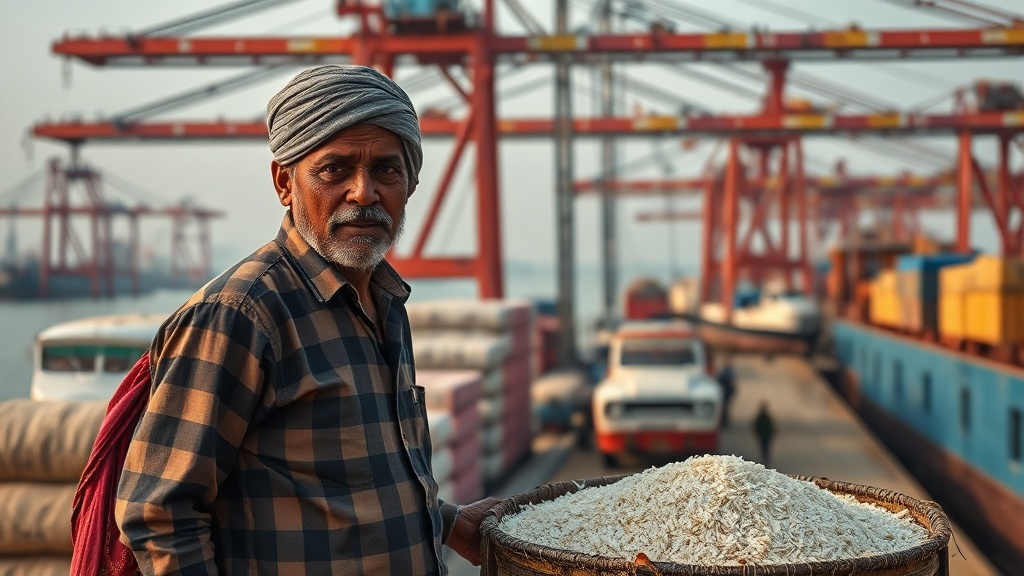
India Mulls Export Duty — When a farmer in Madhya Pradesh loads a truck of IR8 rice onto a highway, the price tag on the grain may soon carry a new surcharge. Delhi officials are quietly drafting a 30% export duty on non‑Basmati rice, a move that could reshape the market for the staple that feeds more than a billion Indians.
Retail rice prices have surged to levels not seen since the 2008 food‑price shock, driven by a combination of lower monsoon yields, higher input costs and robust overseas demand. The Ministry of Commerce’s internal brief cites a 12% rise in the consumer price index for rice over the past twelve months, prompting fears of a broader inflationary spillover.
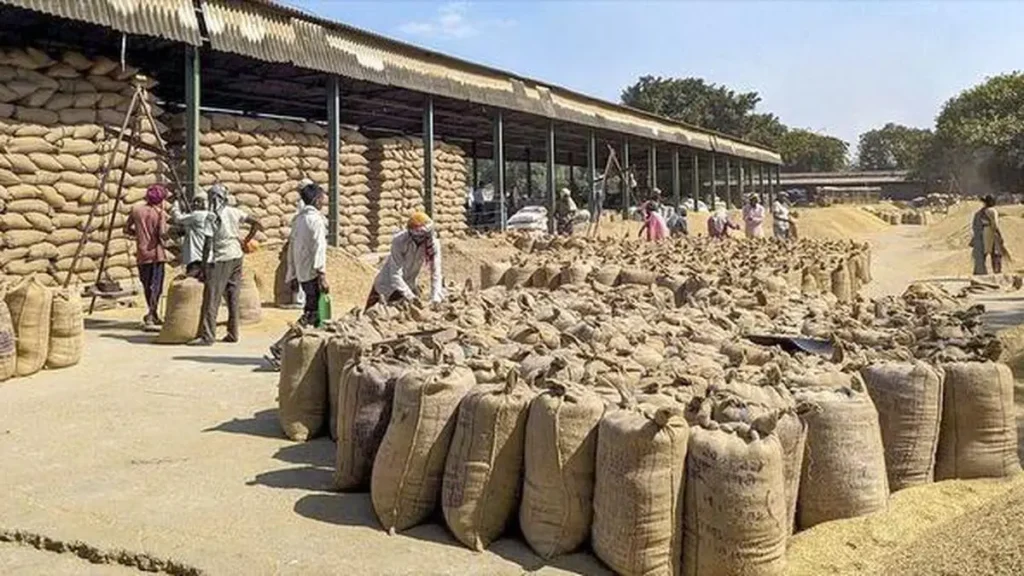
The draft policy outlines two levers. First, a flat 30% export duty on all non‑Basmati rice shipments. Second, a “minimum export price” – a floor that exporters cannot sell below, intended to prevent dumping that would depress domestic markets. Both tools would be enforced through customs declarations, with the duty payable at the point of export clearance.
Should domestic prices breach a threshold—currently being debated at ₹ 40 per kilogram—the ministry retains the option to impose a temporary, all‑out export ban until market conditions stabilise.
Exporters’ concerns and WTO implications
Industry bodies, including the All India Rice Exporters Association, have warned that a blanket duty could contravene World Trade Organization (WTO) obligations, which limit export restrictions to “exceptional circumstances.” They argue that a duty of this magnitude may be deemed “discriminatory” and could trigger disputes.
Furthermore, exporters fear a loss of market share to competing suppliers such as Thailand and Vietnam, which have not faced similar constraints. In the 2024‑25 season, India’s share of global non‑Basmati rice exports slipped to 27% from 31% the year before, a trend they attribute partly to earlier policy uncertainty.
Impact on Indian farmers and consumers
For the average Indian household, the policy could translate into modestly lower retail prices if exporters curb shipments, easing supply pressures. Smallholder farmers, however, may see reduced export volumes, potentially lowering farmgate prices for those who rely on overseas markets.
“The balance is delicate,” says an agronomist quoted in the ministry’s briefing (The Hindu Business Line, 22 Nov 2026). “A duty that’s too high could push farmers to switch crops, while too low a duty won’t move the retail price needle.”
👀 The Bigger Picture
India remains the world’s largest rice exporter, but non‑Basmati varieties dominate its overseas shipments. A 30% duty could shave off an estimated 0.5 million tonnes from global supply, according to market analysts. This contraction may lift world rice prices, benefitting other exporters but raising concerns for import‑dependent nations such as Nigeria and the Philippines.
Meanwhile, the WTO’s ongoing review of “export restrictions for food security” could set a precedent. If India proceeds, it may need to justify the duty under the “public health” or “food security” exceptions, a legal path that remains untested for staple grains.
What remains uncertain
The final decision hinges on a series of consultations slated for early December, involving the Ministry of Commerce, the Ministry of Agriculture, and industry stakeholders. Key questions include: the exact level of the minimum export price, the price‑trigger for a temporary ban, and whether any compensatory measures for farmers will accompany the duty.
Analysts will be watching the upcoming “rice price index” release from the Ministry of Statistics, which could tip the scales toward or away from a hard‑line approach.
🔭 What to watch next: Official notification of the export duty, the WTO’s response, and any announced support schemes for rice growers.
AI-generated representative product-category illustration; not an exact retail product photo. Image provider.
🛒 RELATED PRODUCT
India Mulls Export Duty on Non‑Basmati Rice to Tame Surging Domestic Prices ac
Price: Check retailer for current price.
Customer reviews: A verified rating/count was not returned by the connected catalog source. Read customer reviews →
Disclosure: Some links in this article may be affiliate links. If you buy through them, TITTOO may earn a commission at no extra cost to you.
📰 Sources & Further Reading
- India weighs curbs on non-Basmati rice exports to cool domestic prices (thehindubusinessline.com)
Sources are provided for context and further reading. TITTOO does not reproduce source articles.
🎥 Watch Related
India–Oman CEPA 2026: 99.38% Exports Duty-Free | CEPA Benefits for Rice, Spices & Food Products — Tradologie Global
Related video from YouTube. If embedding is disabled by the publisher, use Watch on YouTube.
 50000
 20000
 20
 20
Explore Related TITTOO Coverage & Discussions
- [Category Hub]: News & Current Affairs Hub
- [Community Forum]: News & Current Affairs Discussion Board
- [Related Editorial Story]: Master the Free Online Text Editor on Axevora: Boost Productivity Without Installing Software
- [About & Standards]: TITTOO Editorial Standards & Methodology
Facing record‑high retail rice prices, the government is weighing a 30% export duty and a minimum export price for non‑Basmati varieties, with a temporary ban as a last resort.
Read the full article ↓Facing record‑high retail rice prices, the government is weighing a 30% export duty and a minimum export price for non‑Basmati varieties, with a temporary ban as a last resort.
Yeh quick view original article ke excerpt par based hai. Puri details ke liye Standard Deep mode padhein.
You are reading the original TITTOO article. Existing article text, links, images, and embedded media are preserved.